Eustace Scrubb
The Silver ChairEustace Scrubb is Jill Pole’s schoolmate, an ally in the search for Prince Rilian, and a former companion of Caspian X on the voyage to the eastern end of the world. His significance lies partly in the way his earlier adventures survive beneath the ordinary identity he carries at school: when the quest reaches its most dangerous passages, memory restores his sense of loyalty and honour, and he chooses action even when he is afraid.
Identity and Background
At the beginning of the story, Eustace is introduced with self-deprecating comedy. He sits on a grassy bank after Jill angrily tells him to go away, then immediately stands because the grass is soaking wet. The narrator calls him by his unfortunate name and adds that he is not a bad sort. That qualification sets a useful measure for his character: he can be awkward and poorly timed, but his intentions and loyalties are better than Jill’s outburst allows her to see.
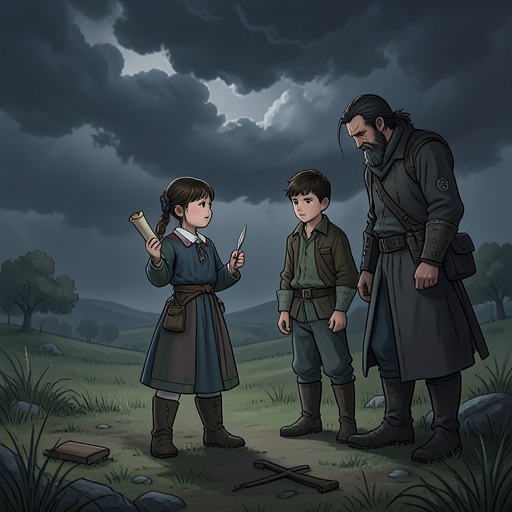
Their quarrel grows from Eustace interrupting Jill while she is crying. When she accuses him of currying favour with the school bullies, he protests that he stood up to Carter over the rabbit and kept the secret about Spivvins even under torture. Jill says she does not know and does not care. The disagreement establishes that Eustace has already taken risks on behalf of others, even if he approaches the moment in a way that sounds like a lecture and fails to comfort Jill.
From School Grounds to Narnia
When Edith Jackie, one of the bullies’ hangers-on and tale-bearers, calls for Jill to come down, Eustace responds without prolonging their argument. He tells Jill to hold hands so they will not be separated, takes her hand, and pulls her through the door, out of the school grounds and England, and into Narnia. His first decisive act in the adventure is thus practical and protective: he turns a threatened escape into a joint passage, keeping Jill with him as they cross between worlds.
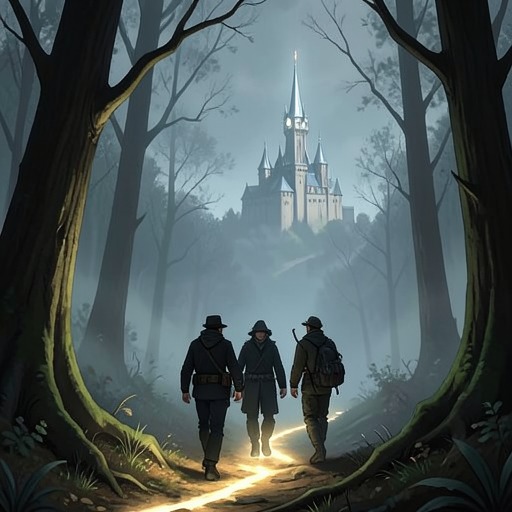
At the Parliament of Owls, Eustace states the allegiance that governs his conduct. He identifies himself as a man of King Caspian X and explains that, in his younger days, he sailed with the King to the eastern end of the world, alongside Reepicheep and Lord Drinian. Because people do not grow older at the same rate in his world and in Narnia, his apparent age does not erase that history. He tells the owls that he will have nothing to do with any plot against the King; the owls answer that they too are the King’s owls. His past is not simply a tale of adventure but a continuing political and personal loyalty.
Memory, Courage, and the Quest
Eustace’s former voyage becomes an explicit credential when the travellers find Prince Rilian. After Puddleglum kneels and says they have come to seek the Prince, Rilian asks the children who they are. Eustace answers that Aslan sent them from beyond the world’s end and identifies himself as the one who sailed with Aslan to the island of Ramandu. His words connect the rescue to both the present command and his earlier experience: he can testify to the Prince’s identity and explain why the children have come.
That testimony matters because the Lady of the Green Kirtle is trying to make the travellers distrust the world they remember. While the Witch’s sweet smell and rhythmic thrumming work against him, Eustace insists that the Overworld is above them, where the sky, sun, and stars can be seen, and reminds her that they met her there. When she claims no memory of the meeting and dismisses it as a dream, he resists the attempt to reduce their shared experience to an unreliable fancy. He likewise names Aslan as the great Lion who called them out of their own world and sent them to find Rilian. The Witch claims not to know what a lion is, but Eustace keeps the source of their mission present even as the enchantment presses on the group.
Near the end of the journey, the prospect of entering a chasm to reach Bism tests the same allegiance in a new way. Jill expects Eustace to dislike the descent even more than she does. Instead, his face changes as his adventures with Caspian return to him; he looks more like the Prince than the old Eustace at Experiment House. He invokes Reepicheep’s example, saying that his old friend would have regarded refusal as a grave injury to their honour. Memory does not make the danger disappear. It gives Eustace a standard by which to meet it, and transforms fear into a decision to accept the adventure.
Rescue and Return to Narnia
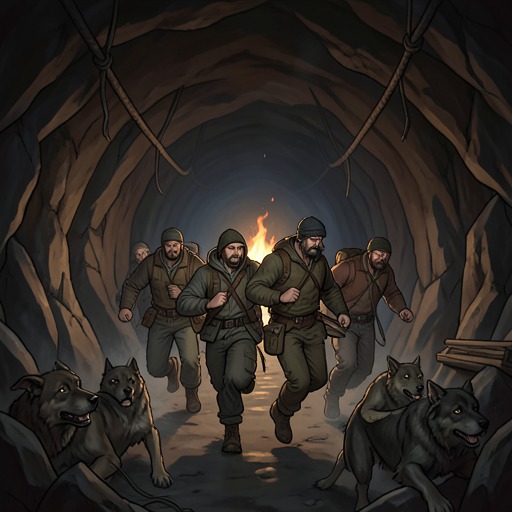
When Jill disappears through an opening in the hillside, Eustace cannot see that the pale bluish light beyond it is moonlight. From underground, he believes the hole leads to another cave filled with hostile creatures. Thinking that enemies have captured Jill, he persuades Puddleglum to give him a back, draws his sword, and pokes his head through the opening. The passage is too small for the others to climb through, and Eustace is bigger and clumsier than Jill; he bumps his head and brings snow down on his face. When he can see again, figures are rushing toward him, so he tries to defend himself. The episode reveals courage in a form that is easily mistaken for aggression: Eustace acts on the belief that Jill is in danger, before he knows that he has reached Narnia among friends.
Jill calls to him to stop and explains that they are safe. The rescuers wrap her in a cloak and fetch her a hot drink, while the Dwarfs begin digging into the hillside; Eustace, pale and dirty, is still emerging from the hole with his sword in hand. His alarm ends not in a battle but in recognition. The contrast between his fearful view of the opening and the actual return to Narnia makes the passage a compact reversal: the apparent entrance into another perilous cave is the way out of the Underworld.
Change, Friendship, and Narrative Role
As the company prepares to descend toward Bism, Eustace’s recovered memories show how far he has travelled from the boy whose awkward advice irritates Jill at school. He remains recognizably the same person, but his former experience now works as an active source of judgement and resolve. He remembers Caspian, Reepicheep, and the earlier voyage not as distant stories but as relationships and commitments that still shape what he will do.
After the adventures, Eustace secretly buries his fine clothes in the school grounds. Jill instead smuggles hers home and wears them to a fancy-dress ball the next holidays. The differing fates of their clothes mark two distinct responses to their return, but the more lasting change is that Jill and Eustace remain friends. The school also changes for the better after the bullies are confronted and the school’s problems exposed; Experiment House becomes quite a good school. Eustace’s return therefore closes both the fantastical quest and the ordinary conflict from which it began.
His role is to connect the children’s school-world escape with Narnia’s remembered history. He protects Jill at the threshold, confirms his allegiance to Caspian before the owls, helps establish the mission to Rilian, and draws on his past with the King and Reepicheep when the journey demands renewed courage. The book’s shifts between the inexperienced schoolboy and the remembered traveller make that continuity visible: Eustace is not finished by his previous adventures, but formed by them, and able to carry their loyalties into a new rescue.